Reading time: About 2 minutes
Writer Dan Kopcow describes rewriting and editing as putting together the jigsaw puzzle and seeing what the picture should look like….
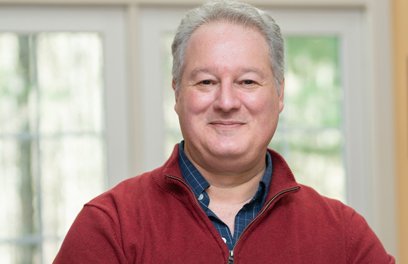
Dan Kopcow’s rom-com, Madcap Serenade, published by Black Rose Writing, was the 2025 Independent Press Award winner for best romantic comedy among several other awards. Dan’s sci-fi noir detective novel, Prior Futures, published by Black Rose Writing, won a 2022 Independent Press Award for Science Fiction Distinguished Favorite and was a Science Fiction Best Thriller of 2021 Finalist at BestThriller.com. Dan’s fiction short story collection, Worst. Date. Ever. was published by Regal House Publishing and was named one of 2020’s top 100 novels by the Community of Literary Magazines and Presses. Dan has published dozens of other short stories in various magazines and journals.
I was excited to talk to Dan about how he approaches writing.
Q. Roughly how much time do you spend writing every day?
I’m always thinking about stories, observing people and situations, solving plot problems, creating characters and situations (what people generally consider “staring into space and being anti-social”). But if you mean physically tapping on a keyboard, anywhere from a few minutes to several hours a day.
Q. What’s a simple activity or habit that makes you a better writer?
Always wanting to learn and improve my craft. That starts by being open and curious.
Q. What interferes with your writing?
The amazing thing about writing is that you’re always experiencing, observing, and creating in your head. You’re always writing. Again, if you mean what interferes from physically writing, it’s the usual things in one’s life.
Q. How do you persuade yourself to sit down to write on days when you really, really DON’T feel like doing it?
That’s usually an indication that the writing project is not fun. I love writing and love the worlds and characters I create. If I don’t love it, and don’t empathize with the world in my book, then I’m probably writing the wrong story. That’s always a strong indicator to take a step back and think about what I’m doing.
Q. Is there a particular motto or saying that you’ve found helpful for writing?
My favorite is from Get Shorty, by Elmore Leonard, with the screenplay by Scott Frank: “I once asked a literary agent what type of writing pays the best. He said ‘ransom notes.’”
Q. Which stage of the writing process do you enjoy the most: researching, writing or editing/rewriting and why?
Rewriting and editing because that’s when you shape the story and all of your work feels like it’s becoming a whole instead of these little parts. It’s where the story tells you what it wants to be. Instead of cutting out and painting these little odd pieces, you’re putting together the jigsaw puzzle and seeing what the picture should look like.
Q. What’s one of the best books you’ve read (either fiction or non) in the last five years?
I tend not to read fiction while I’m writing fiction. But the three that come to mind are: 1. The autobiography, Room to Dream, by David Lynch and Kristine McKenna — great practical advice for imagining stories. 2. Sorry I’m Late, I Didn’t Want to Come, by Jessica Pan ‚ a funny and raw biography that served as research for my current novel coming out next year about an extreme introvert. 3. Norm McDonald’s semi-autobiography, Based on a True Story — clever, meta, original.
Q. What book are you reading right now?
Every Day A Little Death, edited by Josh Pachter. I’m breaking my rule of no fiction while I’m writing fiction, but I’m a big Stephen Sondheim fan, and it’s a short story collection inspired by his songs.
Q. What do you think is the biggest misperception that new writers have about the act of writing?
That you will sit down with a blank page and just start writing word one on page 1 and write all the way through, and then say The End, and be done. That’s lovely in the movies and TV, but that is nothing like the actual writing process. Also, the idea that everybody’s going to get an agent and a manager and get published and go on a book tour that’s all expenses-paid is, again, lovely in the fantasy world of movies and television, but it’s not how it works. It’s hard to make a living as a writer. And most of your time will be spent in the structuring of your novel and the editing and re-writing to make it readable and, hopefully marketable.