Reading time: About 2 minutes
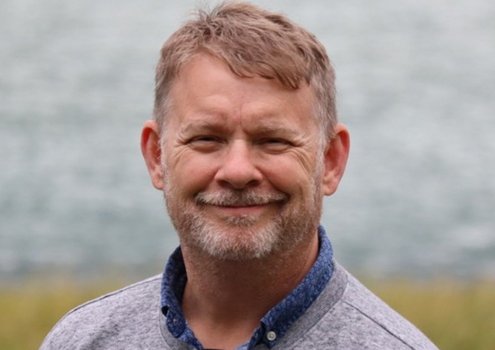
Aaron Cully Drake is one of the rare writers who absolutely loves editing.
Aaron Cully Drake doesn’t actually use his middle name — except in publishing — because people struggle to find the right spelling, so he doesn’t want to put that level of stress on someone he’s just met. He lives in Coquitlam, B.C. He has written Do You Think This Is Strange? His next novel When The World Was Twice As Big comes out this month.
I was excited to talk to Aaron about how he approaches writing.
Q. Roughly how much time do you spend writing every day?
Pure writing? Far less than I should. But I include an hour every day doing things like editing, reorganizing chapters, and making spreadsheets. And a half-hour arguing with ChatGPT about the poignancy of a scene. So at least an hour and 35 minutes.
Q. What’s a simple activity or habit that makes you a better writer?
Writing everything down. Half-baked thoughts. Single sentences. Ideas, fragments, witty banter. I always make notes. Before easy access technology, all my notes went into journals. But I was shy about writing in public, so I invented my own shorthand to obfuscate away from the over-the-shoulder spies that are more numerous in your nightmares than in reality. It worked splendidly, except my short-term memory was never very good, and my handwriting was never very good either, and I usually couldn’t understand a thing I’d written. But still.
Q. What interferes with your writing?
Everything. Everything interferes.
Q. How do you persuade yourself to sit down to write on days when you really, really DON’T feel like doing it?
Usually, I simply fail to persuade myself. On the occasions I succeed, it is because I knew exactly what I want to write about — an anecdote, a particularly vivid scene — or because I tell myself to write about anything at all, just write 500 words. Those days are good. By the time I get to 500 words, the engine is warmed up enough that the words are coming out like hot wax.
Q. Is there a particular motto or saying that you’ve found helpful for writing?
Write drunk, edit sober. Although I suppose I have difficulties maintaining such a discipline.
Q. Which stage of the writing process do you enjoy the most: researching, writing or editing/rewriting and why?
Researching. Rewriting, because it gives you the chance to challenge It depends on the context of the day, really, the incorporation of . Editing.
Q. What’s one of the best books you’ve read (either fiction or non) in the last five years?
(Eyeballing the mint-condition, uncracked books lining the shelves…) There’s just so many… The books I keep returning to over the years are probably on that list: Shogun, by James Clavell. East of Eden and The Grapes of Wrath by John Steinbeck. Various novels by Kurt Vonnegut Jr. These seem to just suddenly pop up randomly but regularly.
Q/ What book are you reading right now?
(Frantically picks up a novel that has sat unopened all year) This one … The two open books (one in the kitchen, one by the lamp) I have are: Godel Escher Bach by Douglas Hofstadter, and I’ve been trying to read it for 30 years and We Need To Talk About Kevin, by Lionel Shriver.
Q. What do you think is the biggest misperception that new writers have about the act of writing?
That scene you refuse to cut? Even though you can’t quite wedge it into the story without problems, because it contains writing too good to lose? Banter too sharp to discard? No, it isn’t. Get rid of it. You will rediscover the good parts soon enough. The majority of your first draft is going to be thrown out in the second draft, so get used to the idea that even your darlingest words are going to the glue factory, eventually.