
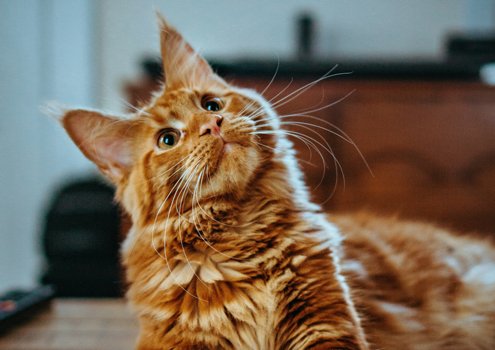
Reading time: About 3 minutes
How pets can help you write: a cat that enforces a morning routine, plus the science on why kittens make you a sharper editor.
The best accountability partner I’ve heard about this year can’t read, doesn’t own a calendar and sleeps 16 hours a day.
She belongs to Antoinette Morgan, a longtime reader of this blog.
Last December, a stray cat moved in with Antoinette, who taught the cat to play fetch (a cat that fetches is rarer than a finished dissertation). Now the cat wakes her every morning, and Antoinette sits in bed tossing the toy with one hand while she writes or edits with the other. The cat doesn’t play the whole time, but the routine gives Antoinette some solid time for writing, and she hasn’t missed a morning since.
“I have not been this productive in years,” she told me.
She (meaning the cat) has no idea she’s running an accountability program. She thinks she works for room and board and the thrill of the chase.
I read Antoinette’s note with envy. I grew up with cats, lots of them, and our house had so many that we counted them the way other families count place settings. But I can’t have one now because my husband is completely allergic. He even took allergy shots as a child, but they didn’t work, and I swear he can diagnose a cat in the next postal code.
But Antoinette’s story got me thinking about what animals do for writers and how the rest of us can borrow some of the benefits.
Let an animal set your schedule
I’ve been telling writers for years to write early, before the day gets its hooks into them. But we’re all skilled negotiators, especially with ourselves, and “five more minutes” soon turns into 40.
A hungry cat at 6 a.m., on the other hand, is not open to a counter-offer. If you have a pet, tie your writing to a routine you already share, such as feeding the dog, then write for 15 minutes. The animal keeps you on schedule, and you get the credit for the discipline.
Without a pet, pick something that happens every morning no matter what, like the kettle boiling, and start writing when it’s done.
Read your draft to a listener who won’t judge
Since 1999, a program called R.E.A.D. (Reading Education Assistance Dogs) has paired struggling young readers with therapy dogs. A child who freezes in front of a teacher relaxes when the audience is a Labrador who thinks every sentence is wonderful.
Adults freeze up too. Reading your draft aloud (once you’ve finished writing it) is one of the best editing tools I know because your ear catches the clunky sentences your eye skips. If reading to an empty room feels silly, read to the dog.
Programmers call their version of this rubber duck debugging. They explain a problem, line by line, to a rubber duck on the desk and the answer often shows up halfway through.
Take the dog (or yourself) for a walk
A 2014 Stanford study found that walking boosted people’s creative output by 60 per cent on average compared with sitting. Dog owners get this benefit whether they want it or not, because no dog has ever accepted “I’m on deadline” as an excuse. They have never had a deadline. They’ve barely had a Tuesday.
Stuck on a chapter? Take the problem along and let your brain chew on it while your feet do the work.
Look at kittens (with scientific permission)
This finding is my favourite because it even works for cat-less writers like me. In 2012, researchers at Hiroshima University had students do a fiddly tweezer task, a bit like the board game Operation, then showed some of them photos of puppies and kittens and showed the others photos of grown dogs and cats. On the second try, the baby-animal group improved by about 44 per cent, while the grown-animal group improved by only about 12 per cent.
The researchers think cute images make us more careful and help us focus on detail. That’s the frame of mind you want for editing.
Consider this your permission slip to look at kittens before you edit. Two minutes of kittens counts as research, but two hours is a different hobby.
Stare at fish
In 2015, researchers from the University of Exeter and Plymouth University found that watching the tanks at the National Marine Aquarium lowered people’s heart rate and blood pressure. It also lifted their mood, and the more fish in the tank, the better people felt.
Fish have one more thing going for them: they never walk across your keyboard. Cats do it so often that a programmer named Chris Niswander wrote PawSense, software that spots a cat strolling across the keys, and it won him an Ig Nobel Prize. It’s the only program I know that protects your manuscript from a critic who sits on it.
Pick an unlikely companion
The crime novelist Patricia Highsmith kept about 300 snails as pets, and she once brought roughly 100 of them to a party in her handbag, along with some lettuce.
I don’t recommend this as party etiquette.
My kids are all grown up now, but when they were young, they often brought snails or slugs home for pets. So, a writing companion doesn’t need to be a golden retriever. The chickadees at your feeder will do, and so will a neighbour’s dog you walk on Saturdays.
Find your own writing companion
Antoinette stumbled into her routine because a stray wanted to play. Pick an animal — your own or a borrowed one — and build your writing time around it.
And, Antoinette, keep going with draft two. Your coach is doing a fine job.
Something I’m loving right now…
The post you’ve just read also arrives in inboxes every Tuesday — and subscribers get something extra. Each week, I include a brief, subscriber-only bonus: a short paragraph featuring a practical tip about a tool, book, video, app or resource I’ve tested and loved. This bonus is never published on my website — only in the email. No fluff. No sales pitch. Just one smart recommendation to make your writing life easier. Subscribe to my newsletter to get next Tuesday’s love note.
*
My video podcast last week looked at the pros and cons of inspiration. You can watch the video or read the transcript, and you can also subscribe to my YouTube channel.
*
Have you ever thought about how pets can help you write? What have you concluded? We can all learn from each other, so please, share your thoughts with my readers and me. To share, please scroll down to the comments, directly underneath the related posts links, below. You don’t have to join Disqus to post! Read my tutorial to learn how to post as a guest. (It’s easy!)
*
Want to share this? You’re welcome to republish any Power Writing issue, in full or in part, on your blog or in your newsletter. Credit me by name and link to www.publicationcoach.com/email-signup/ so your readers can get my free video on how to stop editing while you write. Please wait a week after the issue goes out.