Reading time: About 3 minutes
Frank DeRuosi is a big believer in the maxim, “write what you know.” He says it creates a more realistic environment for the characters and the readers…
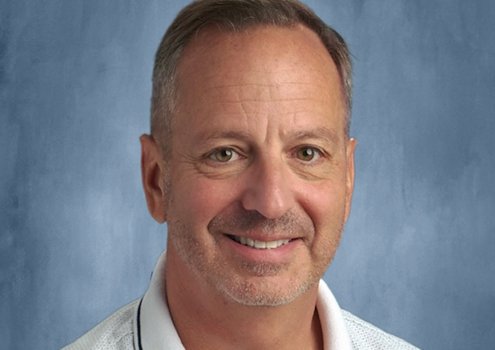
Frank DeRuosi grew up in East Boston, Massachusetts, where he lived for 26 years before moving to Philadelphia, where he and his wife, Karin, now live. He is the father of two grown children, Joshua and Emma. Frank teaches fifth grade at Blue Bell Elementary, where he has been a member of the faculty for 23 years. His debut novel, Holding Back the Tide, was published by Black Rose Writing in May 2023. It is available through the publisher, and most online retailers including Amazon.
I was excited to talk to Frank about how he approaches writing.
Q. Roughly how much time do you spend writing every day?
Well, I’m a schoolteacher by day, so if it’s summer, I try to get at least one chapter on paper each day. If it is during the school year, then my writing falls off.
Q. What’s a simple activity or habit that makes you a better writer?
I try to put myself in the story and rely on sensory details. What would my character experience in a certain situation? How would they feel? What would the setting be like if I were standing in the middle of it — what sounds and smells would be present? What would I feel? Sometimes, I try to envision my story as a television series; how would the action play out if I were watching?
Q. What interferes with your writing?
Work. During the school year, it’s difficult to find the time to immerse myself in my story — whether editing or creating. Being in a classroom of fifth graders all day can be overstimulating. Sometimes when I get home, I just need to decompress for a bit and settle into some quiet time.
Q. How do you persuade yourself to sit down to write on days when you really, really DON’T feel like doing it?
Without sounding too cliched, I think of the Nike motto: Just Do It. The downside of this is that it’s usually these days where I struggle to write; the flow of the story becomes more of a trickle than a steady stream. I’ve also discovered that my forced writing inevitably requires heavy revisions. I’ve learned to embrace the block and wait for the next chapter to reveal itself.
Q. Is there a particular motto or saying that you’ve found helpful for writing?
Yes. John Irving, a favorite author of mine, once said, “Write what you know.” It’s simple but very helpful, not just with building plot and characters, but also with the story’s setting. Being familiar with your setting makes recreating that place as part of the story so much more realistic. You can see the houses, the neighborhoods, the shops and restaurants, the schools, all in your head. Details come easier, and I feel it creates a more realistic environment for the characters and the readers.
Q. Which stage of the writing process do you enjoy the most: researching, writing or editing/rewriting and why?
Of all the stages of putting pen to paper (or fingers to a keyboard), I enjoy the writing part the most. The idea of creating an entire world from just random thoughts in your head is fascinating to me. I have always been drawn to fiction for that very reason. Rewriting is like icing the cake — it smooths out the rough edges and makes it more presentable. But putting all the ingredients together is where the magic happens.
Q. What’s one of the best books you’ve read (either fiction or non) in the last five years?
In the last five years I would have to say, All the Broken Places, by John Boyne. Wonderfully written, intensely emotional, and thought-provoking. It’s a sequel, of sorts, to The Boy in the Striped Pajamas and chronicles the adult life of Bruno’s older sister Gretel.
Q. What book are you reading right now?
I float back and forth between middle grade/young adult fiction to use in my classroom as a read-aloud or book clubs and adult fiction. Currently, I’m reading The Visitors, a middle-grade fiction book by Greg Howard. If you enjoy ghost stories, check it out.
Q. What do you think is the biggest misperception that new writers have about the act of writing?
The biggest misconception for me, and perhaps for all new writers, was the sheer number of times I had to read my manuscript. I think many new authors feel that when they place that last period on the last sentence of their work, they have finished. But that is precisely when the hard work begins. Not just editing and revising, but trying to find a publisher, which in-and-of-itself, can be daunting. The road to publication can be a difficult one. But it is also rewarding.