Reading time: About 2 minutes
Rhona McAdam says she deliberately avoids streaming and other television services, which can eat up too much of her thinking, reading and writing time….
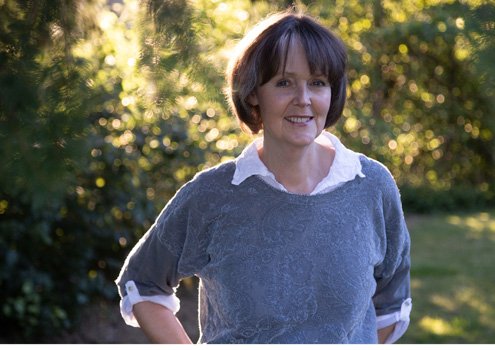
Rhona McAdam was born in BC, has lived in Edmonton and London UK, but now makes her home in Victoria. She spent a memorable year in Parma, Italy, earning her third, and probably final, master’s degree, in Food Culture & Communication. Author of 11 books, her poetry collections include Cartography and Ex-Ville and, most recently, Larder; plus Digging the City: An urban agriculture manifesto (nonfiction). She’s the current BC/Yukon rep for the Writers Union of Canada.
I was excited to talk to Rhona about how she approaches writing.
Q. Roughly how much time do you spend writing every day?
It varies hugely. I’m mostly a poet, so actual writing when working on poems may not even happen every day; I need to spend time reading, walking and reflecting. If I’m editing poetry drafts, it’s probably around an hour or two total – though as the subconscious keeps churning, so editorial tweaks can slide in between other activities. For nonfiction, I spend probably two to three hours maximum writing per day (though on research, far more than that).
Q. What’s a simple activity or habit that makes you a better writer?
Reading other writers and attending their readings.
Q. What interferes with your writing?
Housework, yardwork, exercise, cooking, paying bills, eating, walking the dog, visiting friends… basically daily life! Paid work used to be the biggest obstacle, but I am more or less retired now, so that’s taken a lot of stress and headaches away. I’ve deliberately avoided subscribing to streaming or other television services, which can eat up too much thinking, reading and writing time.
American poet Billy Collins:
“There is that part of us that believes
We will never die – otherwise,
How could we watch so much television?”
Q. How do you persuade yourself to sit down to write on days when you really, really DON’T feel like doing it?
Observing a deadline; my writing group has been 100% essential for that.
Q. Is there a particular motto or saying that you’ve found helpful for writing?
Billy Collins again: “I sit in the dark and wait for a little flame to appear at the end of my pencil.” For me, poetry has to have an igniting spark that you can’t always control or guide, so I welcome that mysterious beginning, which makes a poem a discovery for both the poet and the reader.
Q. Which stage of the writing process do you enjoy the most: researching, writing or editing/rewriting and why?
Whether prose or poetry, it’s editing/rewriting, because the destination is in sight. I can get too immersed in research, and finding a beginning can be the hardest step – often one I can’t force, so editing means I have something concrete to work with.
Q. What’s one of the best books you’ve read (either fiction or non) in the last five years?
Poetry: Kayla Czaga, Midway – sharp, funny, heart-rending and readable. Fiction: Niall Williams, History of the Rain – spectacular language, great structure, and a compelling protagonist. Nonfiction: Garth Mullins, Crackdown – fascinating life story and thoughtful examination of addiction, empowerment and advocacy for safer drug supply.
Q. What book are you reading right now?
Lisa Ridzen, When the Cranes Fly South. It’s a sad and accurate portrait of the indignities of aging, and the precariousness of human relationships.
Q. What do you think is the biggest misperception that new writers have about the act of writing?
That success = publication = a living. And that writing is something that can be picked up without the same degree of study and practice that the other arts require. With the premature release of AI into the world, I think there’s a risk that new writers will simply adopt it as a shortcut to formulate their words for them, and we’ll lose the magic that results when human creativity is crafted into language.