Reading time: About 1 minute
Melanie Jackson says that writers would benefit from adapting the Hemingway strategy of “less is more.”
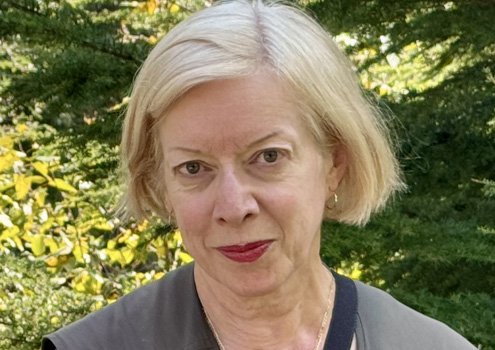
Melanie Jackson is a freelance Vancouver writer/editor. As well as corporate-communications work, Melanie contributes to The Seaboard Review of Books. She’s also the author of such middle-grade/young-adult suspensers, mostly with Orca Book Publishers, as The Big Dip and Death Drop, and the Dinah Galloway Mystery Series. For Medusa’s Scream, a Canadian Children’s Book Centre Best Book, Middle Readers, 2018, Melanie was a TD-CCBC Book Week author. You can read more about her on the Writers’ Union of Canada website.
I was excited to talk to Melanie about her approach to writing.
Q. Roughly how much time do you spend writing every day?
1.5 to two hours on creative writing; two to three more hours if I have freelance assignments to work on.
Q. What’s a simple activity or habit that makes you a better writer?
Write first thing every morning.
Q. What interferes with your writing?
Admin stuff, like: discussing an assignment by email or phone; prepping tax materials each year (ugh); or promoting something I’ve written via social media.
Q. How do you persuade yourself to sit down to write on days when you really, really DON’T feel like doing it?
N/A. I always feel like writing! As a friend who’s into sketching says, creativity is the zone you love escaping into.
Q. Is there a particular motto or saying that you’ve found helpful for writing?
Think like Ernest Hemingway: less is more.
Q. Which stage of the writing process do you enjoy the most: researching, writing or editing/rewriting and why?
Writing and editing/rewriting. It’s satisfying to get that first draft down. Also satisfying to go back through and prune and polish it.
Q. What’s one of the best books you’ve read (either fiction or non) in the last five years?
The novel James (2024), by Percival Everett.
Q. What book are you reading right now?
Thomas Becket, Warrior, Priest, Rebel, Victim (2012), by John Guy. Especially interesting in our current times, as you could argue that Becket was an early Antifa!
Q. What do you think is the biggest misperception that new writers have about the act of writing?
That they have to explain, which usually ends up being over-explaining. Again, less is more. C.f. the end of, citing Ernest again, A Farewell to Arms. After the protagonist’s sweetheart dies, he walks out into the rain. That’s it. So elegant.