Reading time: About 2 minutes
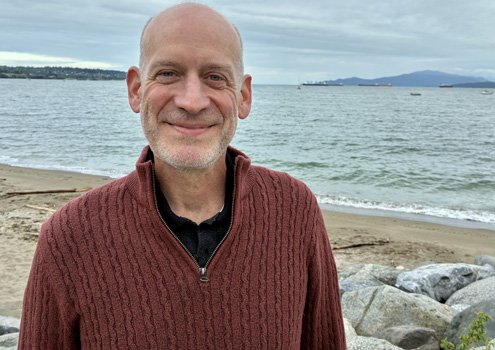
Bill Arnott likes to inspire himself with a quote from Australian novelist Tim Winton, who advised: “Watch, listen, remember, wonder, and READ.”
Bill Arnott is the BC Book Prize bestselling author of A Perfect Day for a Walk, A Perfect Day for a Walk by the Water, the award-winning Gone Viking travelogues and BC’s top-selling Season memoirs, the newest being A Festive Season on Vancouver Island. He’s a Fellow of Britain’s Royal Geographical Society and Travel Ambassador for the Royal Canadian Geographical Society and Canadian Geographic. Find Bill online @billarnott_aps or with his #GoneVikingCommunity.
I was excited to talk to Bill about how he approaches writing.
Q. Roughly how much time do you spend writing every day?
I divide writing time between working “in” my business and “on” my business, i.e. creating the art, and then marketing that art. I dedicate about four hours each day to my writing — my business, while the allocation of “in” and “on” shifts based on deadlines or what’s currently being promoted.
Q. What’s a simple activity or habit that makes you a better writer?
Reading. Along with a disciplined work ethic — doing the things we might prefer not to do, such as promotion and public events. In other words, all those things that subjugate us to (additional) rejection.
Q. What interferes with your writing?
The exhaustion of rejection. And yet that’s essential to ensure ongoing success.
Q. How do you persuade yourself to sit down to write on days when you really, really DON’T feel like doing it?
I liken those days to getting some exercise. Irrespective of how much we may rather not do it, it’s imperative, plus it feels so good when it’s done!
Q. Is there a particular motto or saying that you’ve found helpful for writing?
A quote from Australian novelist Tim Winton: “Watch, listen, remember, wonder, and READ.”
Q. Which stage of the writing process do you enjoy the most: researching, writing or editing/rewriting and why?
I love the first couple of drafts of writing—that creativity—making something substantial from seemingly nothing. It’s immeasurably satisfying and feels like tapping pure potential.
Q. What’s one of the best books you’ve read (either fiction or non) in the last five years?
Easy. The Old Ways: A Journey on Foot, a nonfiction book by Robert Macfarlane, which I’ve purchased, read, gifted, and repurchased, reread, and regifted multiple times.
Q. What book are you reading right now?
Perhaps unsurprisingly, I’m now reading Macfarlane’s most recent, Is a River Alive?
Q. What do you think is the biggest misperception that new writers have about the act of writing?
Mistakenly believing that the work is done once the manuscript’s finished. When in fact the lion’s share of the effort (with respect to commercial success) has only just begun.