Reading time: About 2 minutes
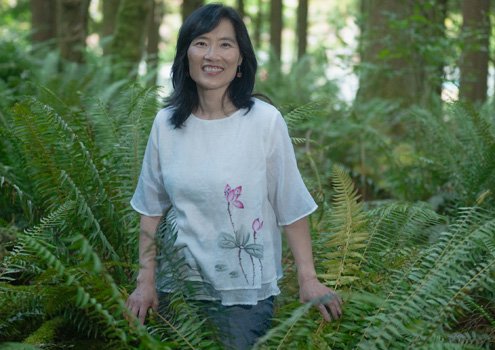
Wiley Wei-Chiun Ho says she used to think she should write only when inspiration struck. So, she didn’t write much. Now, she understands she just has to sit down and do it….
Wiley Wei-Chiun Ho has published short stories and personal essays in PRISM international, Ricepaper magazine, River Teeth, Room and several anthologies. Her first book The Astronaut Children of Dunbar Street: A Memoir is due out March 17, with Douglas & McIntyre. If you live in Vancouver, you can catch her at the 2026 North Shore Writers’ Festival on April 11 at the North Vancouver City Library.
I was excited to talk to Wiley about how she approaches writing.
Q. Roughly how much time do you spend writing every day?
I would love to say that I am consistent, but I’m not. I write anywhere from a few minutes (a page, a line of dialogue, an idea) to the whole day (especially under deadline). I have taken to keeping a notebook by my bed, which I find especially useful when revising long pieces, for capturing the subconscious, which has been helping me work through problems overnight.
Q. What’s a simple activity or habit that makes you a better writer?
This one must be universal: reading. How can you not be inspired by a beautiful line or turn of phrase? Also, consuming different kinds of art. I once waxed poetic after watching a cooking show – the garnishes were next level.
Q. What interferes with your writing?
The damn smartphone! It definitely outwits everyone’s willpower. If I use my phone to do “research,” I’m done for the day. I might start by innocently “fact-checking” something, but inevitably time drains away and my brain becomes waterlogged with too many factoids to write properly. True story: I was looking into the volcanic phenomenon of saltwater hot springs for an essay … two hours later, I found myself doomscrolling rogue waves, sink holes, skin rashes, … and watching cat videos.
Q. How do you persuade yourself to sit down to write on days when you really, really DON’T feel like doing it?
This is a trick I learned from Daphne’s Get It Done program: write and celebrate getting it done. I dangle a reward in front of myself and say, “If you write this morning – even just half an hour – you can go for a hike and a marzipan croissant this afternoon.” I often exceed my own expectations this way.
Q. Is there a particular motto or saying that you’ve found helpful for writing?
Samuel Beckett’s quote inspires me endlessly: Ever tried. Ever failed. No matter. Try again. Fail again. Fail better. It may sound defeatist, but I think it’s quite the opposite. We are always going to fall short of what we aspire to, so why not address our great fear of failure and minimize it?
Q. Which stage of the writing process do you enjoy the most: researching, writing or editing/rewriting and why?
I love the flow of the shitty first draft because I know no one will read it except me. Second best is rewriting to find out what I really meant to say.
Q. What’s one of the best books you’ve read (either fiction or non) in the last five years?
For fiction, I love Interior Chinatown by Charles Yu. Written in the form of a screenplay, it deals with racism and assimilation in the most hilarious and endearing ways possible. For nonfiction, the graphic memoir Feeding Ghosts by Tessa Hulls seamlessly weaves political history with personal narrative, tracing three generations of women through exile, trauma, and survival.
Q. What book are you reading right now?
I have been busy editing my manuscript for publication, so have been collecting more than reading books. I now have a dangerously wobbly TBR tower, so I will start from the top. Currently, that’s Best Canadian Stories 2026, edited by Zsuzsi Gartner.
Q. What do you think is the biggest misperception that new writers have about the act of writing?
When I first started creative writing, I thought you should only write when inspiration strikes. So, I didn’t write much. Now, I understand you just have to sit down and do it. The act of writing upwells new ideas and thoughts, which generates more writing.